
 Tienes reportajes guardados








BOOM. The rise in international gold prices has fueled the expansion of illegal mining in Peru and the laundering of the profits generated by this activity.
Illegal mining is the criminal economy that generates the most money in Peru. An analysis by OjoPúblico, based on data from the 14 specialized anti-money laundering prosecutor's offices of the Public Prosecutor's Office, identifies 60 companies suspected of laundering illegal gold, exposes their structures — including former navy officers linked to drug trafficking — and documents how nationally-scoped investigations in this area doubled between 2024 and 2025.
21 Junio, 2026
Maple Holding Group presents itself on its website as a company that "accompanies small-scale artisanal producers and connects them with global markets." According to its founders, it functions as a bridge between Peruvian miners and international buyers through an "ecosystem called the gold union," managing operations in exchange for a commission.
In just two years, the Miraflores-based company participated, as an intermediary, in gold bar shipments valued at USD 46.8 million destined for Delhi and Mumbai, according to Indian customs records. Today, part of those operations is the subject of an investigation for alleged money laundering linked to illegal mining.
During that same period, the company was managed by a former member of the Peruvian Navy. His name also appears in another prosecutorial investigation examining the failed shipment of more than 225 kilograms of cocaine from the port of Callao in January 2025, according to prosecutorial and judicial documents reviewed by this outlet.
The case forms part of a database compiled by OjoPúblico from information obtained — under the Transparency Law — from the 14 specialized money-laundering prosecutors' offices of Peru's Public Prosecutor's Office. The records show a sustained increase in investigations linked to illegal mining.
Between 2024 and 2025, the cases opened in these prosecutors' offices — which handle the most complex cases, related to alleged criminal organizations operating across different regions of the country and maintaining international connections — rose from 11 to 22. And the trend continues: through late April of this year, the prosecutors' offices had opened 16 new investigations and had accumulated 91 active cases.
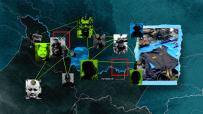
In 27 of those investigations, this outlet was able to identify the companies and individuals charged, which made it possible to reconstruct the corporate networks linked to gold illegally extracted by dredges in the Amazon and in underground mines in Peru's highlands.
Months before the Superintendency of Banking, Insurance and AFP (SBS) warned, in its annual money-laundering report published in April of this year, that drug trafficking and illegal mining "converge" and share "structures, logistics and routes," a police operation in Callao had already laid bare those connections.
On the night of January 29, 2025, a group of men waited for a shipment to arrive at a warehouse near Jorge Chávez Airport. The operation was coordinated among them through a WhatsApp group called "Los Delta."
At 11:48 p.m., one of the members reported that he was "standing by" to enter the warehouse.
Shortly before midnight, the tone of the conversation changed: photographs of vehicles in the surrounding area began to circulate, along with warning messages.
Two of them also exchanged private messages. "They're from the State," one wrote. "We're screwed," another replied. The last warning recorded in the group — "Snitches [sapos] in the area" — came too late.
At 1:30 a.m., agents from the Anti-Drug Police (Dirandro) entered the warehouse and seized 225.255 kilograms of cocaine hydrochloride concealed in nine black canvas bags. The drugs were distributed in rectangular brick-shaped one-kilogram packages, according to case documents.
Police forensic reports valued the shipment at an estimated USD 900,000. The Prosecutor's Office said it was to leave through the port of Callao in containers bound for abroad.
Just eight minutes after the start of the police operation, a final message appeared in the chat: "Gentlemen please for security delete all information from the group's phones."
Nevertheless, police managed to identify the members of "Los Delta" and reconstruct the conversation. One of them, Elbis Alfredo Castillo Mendoza, was detained following a vehicle chase. According to the prosecution's charges, he was carrying a pistol with seven rounds of ammunition on his belt, for which he held no license.
On May 20 of this year, the Fifth Preparatory Investigation Court of Callao formalized charges against three members of "Los Delta" for aggravated drug trafficking. The Prosecutor's Office has requested an 18-year effective prison sentence for each of them.
The case is currently in the intermediate phase, in which the court analyzes the charges before deciding whether the case proceeds to oral trial.
Among those under investigation is Lener Lapa Segovia, 48, a former member of the Peruvian Navy, as are the other two defendants. According to the prosecutorial investigation, he participated in the "Los Delta" WhatsApp group and in a second group called "OPS - BÚNKER."
According to the Public Prosecutor's Office, the three members of both groups acted in concert to guard and secure the drug shipment. Prosecutors also attribute to Lapa Segovia the message sent after the police operation instructing members to delete their communications.
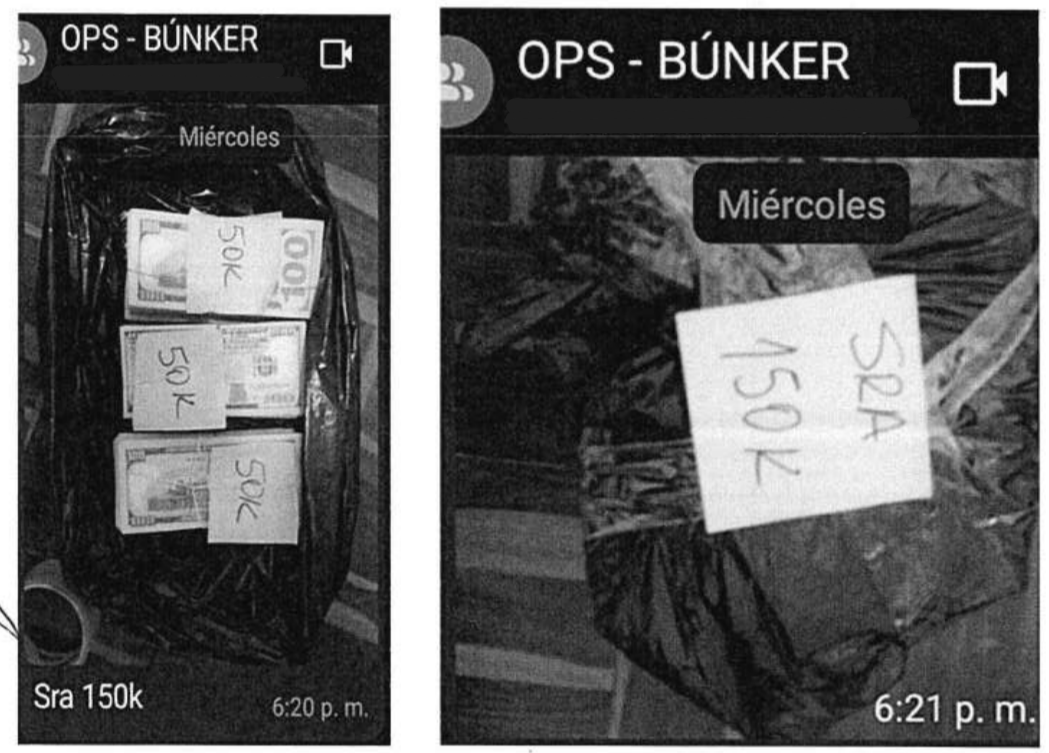
Beyond the alleged drug trafficking case, Lapa Segovia also appears as a suspect in an investigation for alleged money laundering linked to illegal mining, in which Maple Holding Group is also implicated.
The former navy officer ran the consultancy during the period in which it intermediated multimillion-dollar gold shipments to India, between July 2022 and August 2024.
The preliminary investigation, launched in July 2023, is handled by the Sixth Office of the Second Supraprovincial Corporate Criminal Prosecutor's Office Specialized in Money Laundering Offenses.
The judicial documents reviewed by OjoPúblico reveal, moreover, further connections between the foiled cocaine shipment and the Miraflores consultancy that links small mining companies with gold buyers in Asia.
The pistol found on Elbis Alfredo Castillo Mendoza's belt —the lead defendant in the alleged drug trafficking case— following a police pursuit was registered in the name of Carlos Arce León. In 2021, he co-founded Maple Holding Group together with his older brother, Alberto Arce León.
A year later, both brought Lapa Segovia into the company's management.
According to the brothers —based on the statement they gave before the Superior Court of Justice of Callao and to OjoPúblico— Carlos Arce León, Elbis Castillo Mendoza and Lener Lapa Segovia have known each other since their time in the Peruvian Navy.
Lapa Segovia, a superior technician, was the instructor of the other two, who served as submarine technicians. On the night of his detention during the drug seizure, Elbis Castillo was still on active duty. The others had previously left the Navy.
All three also worked together for a security company made up of former navy personnel, tasked with guarding the transport of gold bars prior to their export, according to testimony they gave before the court.
The reason why Carlos Arce's weapon was found on the day of the foiled drug shipment has two different versions.
In a meeting with this outlet, Arce León stated that he had left the weapon in Elbis Castillo's vehicle before traveling to the United States, having failed to notice he was carrying it in his luggage. According to his account, he had stored it in the glove compartment when Castillo drove him to the airport. The Prosecutor's Office has not charged him in the drug trafficking case.
Elbis Castillo confirmed this version to OjoPúblico. However, prosecutorial documents indicate that he had been using Arce León's weapon for his security work. In phone chats with Lapa Segovia, he mentions a borrowed weapon he needed to return.
Elbis Castillo's attorney declared to this outlet, in a written response, that his client has no connection to the seized drugs and that on the night of his detention he was in the area "performing a mineral transport service." He maintained that his client was guarding a nearby property, that he had followed a suspicious vehicle, and that he was detained without having entered the premises where the operation was carried out.
Despite these exculpatory accounts, the WhatsApp groups detected by police add another element to the connections with Maple Holding Group. Among the profiles registered in both conversation groups — "Los Delta," active during the night of the cocaine seizure, and "OPS - BÚNKER," used to coordinate the transport of large sums of cash — appears a member under the name "Maple Paul Guerrero."
Contacted by this outlet, the company stated that it has not maintained, and does not maintain, any employment relationship with a person by that name. Lapa Segovia, through his attorney, declared that he does not "recall in detail who that person was," as various people participated in the groups to coordinate security services.
Three weeks after the foiled cocaine shipment, in February 2025, he resigned as general manager of Maple Holding Group and the older of the two brothers, Alberto Arce León, assumed the position. Beyond Maple Holding Group, the two brothers have developed a range of business activities.
Records from the National Superintendency of Public Registries (Sunarp) show that they hold or have held executive positions in several Lima-based companies, among them a marketing agency, an events production company, a café in Miraflores and a brewery in Barranco.
Regarding the cocaine seizure in Callao, both brothers, in the presence of their attorneys, told OjoPúblico that the events "bear no relation whatsoever" to Maple Holding Group's activities or to themselves. The company gave the same response in writing.
Furthermore, according to them, it was Lapa Segovia himself who informed them of the investigation against him for his alleged involvement in a drug trafficking case, following which he requested to step down from the position.
The company added that this decision was driven "exclusively by criteria of business prudence and risk management, and not by the existence of proven criminal liability."
It also stated that Lapa Segovia, in his free time, carried out "private security activities for third parties," which, it specified, were "independent of and unrelated to the functions, activities and operations linked to Maple."
Before the court of the Superior Court of Justice of Callao, Lapa Segovia maintained that the instruction to delete messages in the WhatsApp group on the night of the drug seizure was in keeping with security protocols applied in the course of his duties.
Through his attorney, he further told this outlet that his participation in these groups was part of his "work as a security agent" and maintained that his connection to the drug trafficking case was "unjust" and the result of "confusion" and an "absolute mistake."
According to the minutes of a hearing held on May 25, reviewed by OjoPúblico, Judge Luis Torres Bonifacio noted that the WhatsApp messages presented by the Prosecutor's Office were insufficient to sustain charges against him, given that he was not found by police at the location where the operation took place.
According to his attorney, at a hearing held on June 5, the court issued a dismissal ruling in his client's favor.
However, 15 days later, Lapa Segovia's defense had not submitted any document confirming that decision .When contacted by this outlet, the Superior Court of Justice of Callao did not provide the hearing transcript or a copy of the video that would allow the dismissal to be verified.
The Arce León brothers and their company are not implicated in the alleged drug trafficking case. However, they have been part of a separate investigation for alleged money laundering linked to illegal mining since July 2023, in which the former manager Lapa Segovia is also named.
Alongside Maple Holding Group, two other companies also appear as defendants in the same prosecutorial file: Minera & Constructora Santa Cruz FAI and Minera & Constructora Virgen de Orkupiña, both domiciled in Juliaca, whose general managers are married to each other.
The investigation was launched following an alert from the National Superintendency of Customs and Tax Administration (Sunat) regarding the export of a gold bar by Santa Cruz FAI, an operation in which Maple Holding Group acted as intermediary, as confirmed to OjoPúblico by the prosecutor in charge of the case, Pablo César Espinoza Vásquez, and by the company itself.
Santa Cruz FAI also appears in Sunat's mercury users registry. Its general manager, Filomena Achaquihui Illanes —also charged with alleged money laundering— has suspended registrations in the Reinfo (Peru's national registry of artisanal and small-scale miners), both in a personal capacity and linked to the company, associated with concessions located in Madre de Dios and Puno.
The second mining company under investigation, Virgen de Orkupiña, is domiciled a few meters from Santa Cruz FAI and is tied to the same family unit: its general manager is Hermilio Esenarro Mamani, husband of Achaquihui Illanes.
According to his prosecutorial file, which OjoPúblico accessed, Esenarro Mamani also faces investigations for alleged money laundering in Madre de Dios and falsification of public documents in Puno.
The two companies share another common denominator: both sold gold bars to Opus Refinery Private Limited, a commercial partner of Maple Holding Group. The refinery belongs to Raksha Bullion, one of India's largest gold groups.
In September 2022, the offices of this conglomerate in Mumbai were raided by the Enforcement Directorate (ED) as part of a money-laundering investigation, which resulted in the seizure of 91.5 kilograms of gold.
This outlet sent questions by email to both Puno-based mining companies, their managers and to Opus Refinery. At the time of publication, none had responded.
Maple Holding Group maintained, both in a meeting with OjoPúblico and in writing, that its connection to both mining companies is limited to the provision of commercial and administrative support services, without assuming ownership of the gold material or intervening in its extraction, processing or commercialization.
The company also considered — as did Lapa Segovia in statements to this outlet — that the money laundering investigation should be archived, arguing that there were two proceedings for alleged illegal mining linked to the case that had already been closed: one in Puno, involving the same defendants as in the money laundering investigation, and one in Madre de Dios, with the manager of Minera Santa Cruz FAI, Filomena Achaquihui Illanes, as defendant.
The Public Prosecutor's Office denied an information request filed by this outlet under the Transparency Law to learn the current status of the money laundering investigation.
In its response, it stated that the disclosure of said information "could compromise the adequate development of the criminal investigation."
Nevertheless, prosecutorial sources consulted by OjoPúblico confirmed that the inquiries are ongoing.
Unlike the Lima-based consultancy Maple Holding Group, the two Puno mining companies conform to the most common pattern among companies investigated for alleged money laundering linked to illegal mining.
Of the 60 companies reviewed in the database compiled by OjoPúblico, 21 declare to Sunat that their main activity is mining and 19 others declare it to be the commercialization of metals and metallic minerals.
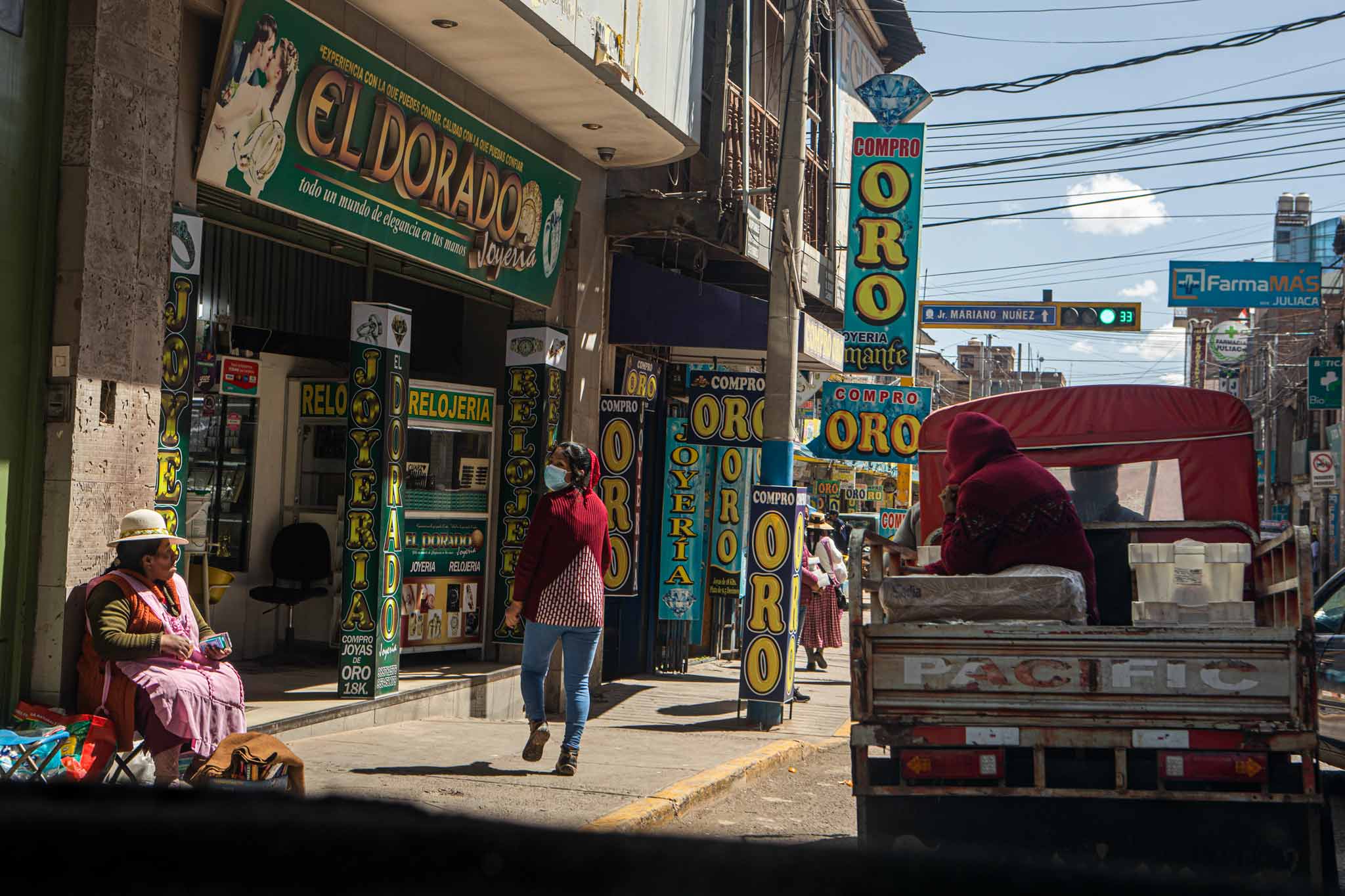
Their geographic location also follows a clear trend: nearly half of the charged companies —28 of 60— have their registered address in Puno, a region that a recent SBS report identifies as one of the highest-risk areas in the country for suspicious financial transactions associated with this crime.
However, none of the four offices of the Specialized Provincial Prosecutor's Office of Puno is currently investigating any money laundering case linked to illegal mining.
Together with Callao, Tumbes, Arequipa and Áncash, the border region with Bolivia is one of five departments in the country with specialized prosecutors' offices for money laundering offenses. Across the entire Peruvian Amazon —which, according to the Peruvian Amazon Research Institute (IIAP), covers more than 60% of the national territory— there is none.
Money laundering from illegal mining is not channeled exclusively through companies formally registered as mining operations. This was stated to this outlet by Daniel Linares Avilez, former head of the Financial Intelligence Unit (UIF), who noted that construction companies, hardware stores, transport firms and companies registered under "other activities not otherwise classified" are also used for this purpose.
By declaring income to the financial system, these companies face less stringent controls than mining firms in high-risk regions such as Puno and frequently incorporate the trading of metals as a secondary activity, Linares Avilez said.
Among the 60 companies investigated, OjoPúblico identified structures of this type: two construction firms, a hardware store, a consultancy, a security company and a transport company. Linares also warns that in this sphere there operate specialized consultants who design bespoke laundering schemes.
The investigations against Maple Holding Group, Santa Cruz FAI and Virgen de Orkupiña followed the most common route: a customs alert from Sunat prior to a gold export, a pattern that also underlies the other eight active cases handled by prosecutor Espinoza Vásquez.
SBS data confirm that this is not an exception. Fifty percent of suspicious transaction reports in this area come from customs agents and 36 percent from banking institutions.
The trend continues upward. In 2025 alone, 1,657 reports were filed with the UIF in which illegal mining appears as a possible predicate offense for money laundering, an increase of 270 percent compared to the 448 cases reported the previous year.
And there are no signs that the phenomenon will diminish. The SBS projects that the sustained rise in the international gold price will continue to drive illegal extraction and, with it, the need for mechanisms to conceal its proceeds. According to estimates by the Institute of Peruvian Studies (IPE), these reached USD 12 billion in Peru during 2025.
And there are no signs the phenomenon will abate. The SBS expects that the sustained rise in international gold prices will continue to drive illegal extraction and, with it, the need for mechanisms to conceal the proceeds. According to estimates by the Instituto de Estudios Peruanos (IEP), those proceeds reached USD 12 billion in Peru during 2025.
OjoPúblico exists because of a community that values independent journalism, rigorous investigations, and the strengthening of democracy. Remember: the more informed the public is, the harder it is for the powerful to evade accountability. Help us keep moving forward!
Se ha añadido un artículo a su lista de lecturas