

 Tienes reportajes guardados







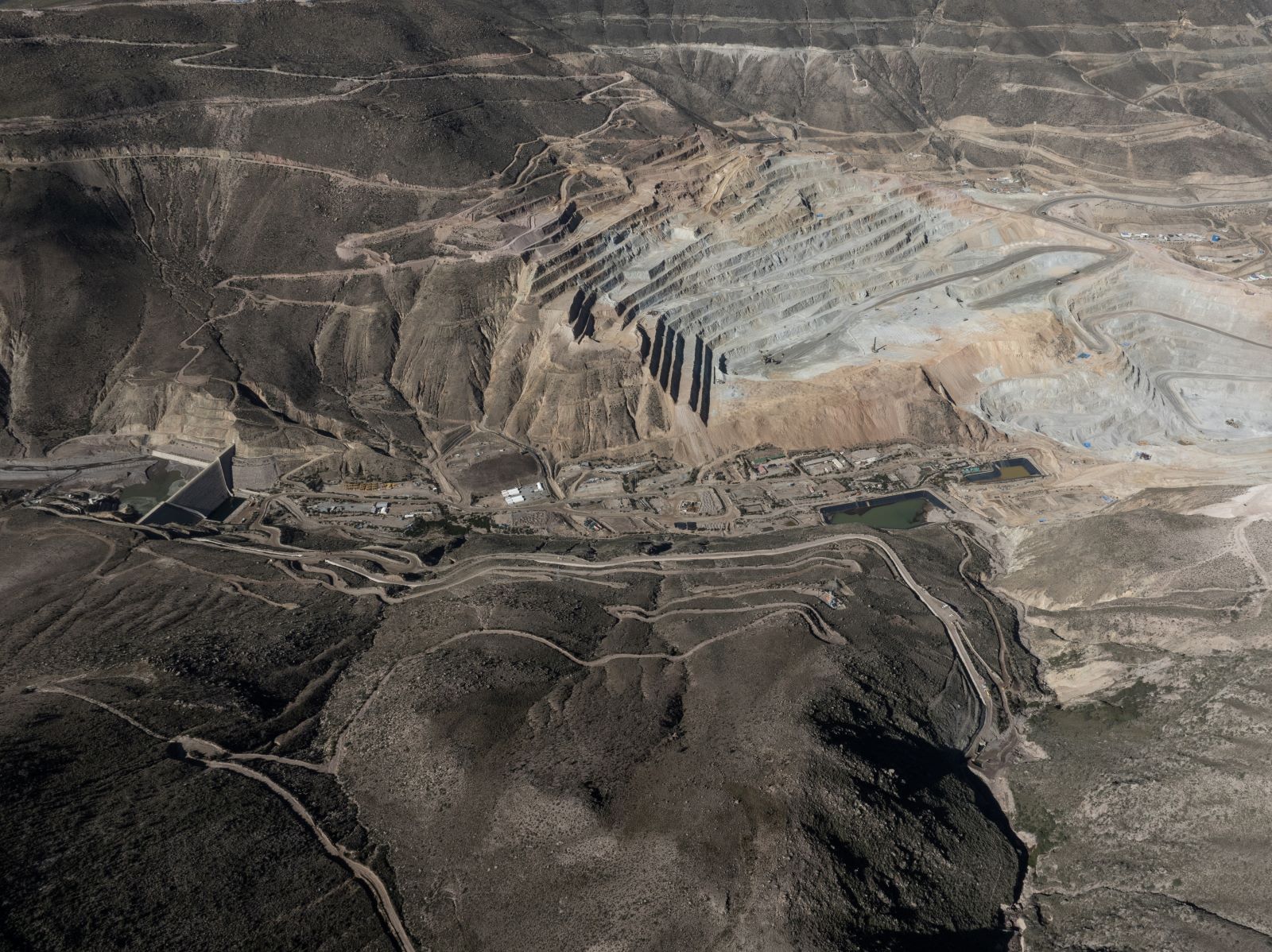
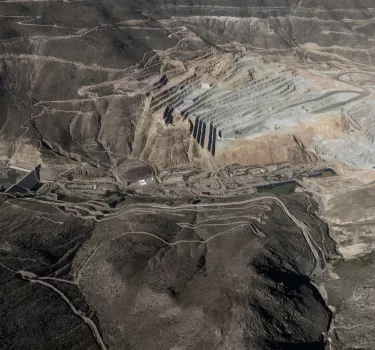
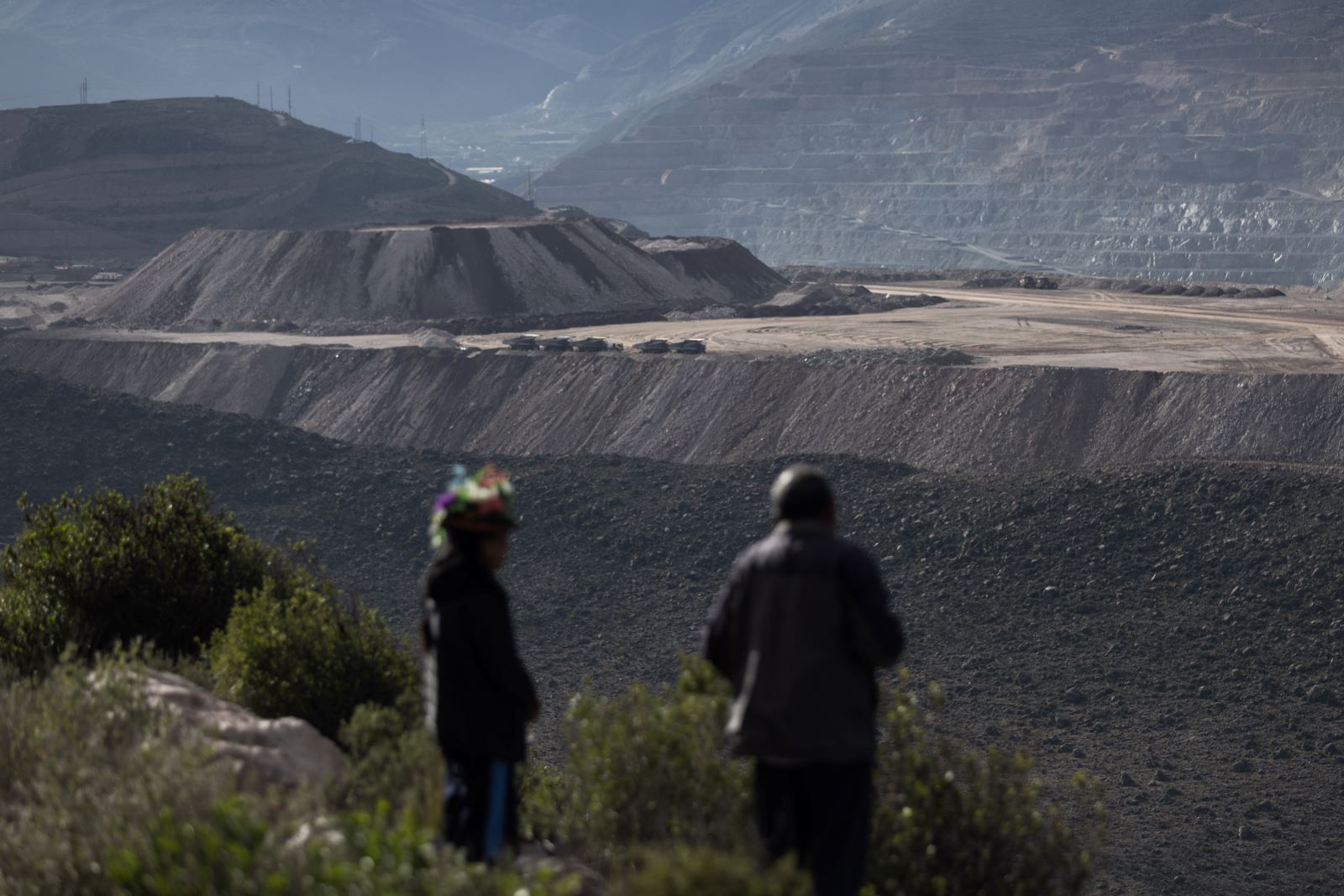
OPEN. In the province of Moquegua, Anglo American operates the Quellaveco project, one of the most modern mines in Peru.
Germany, the leading importer of Peruvian copper in Europe, aims to double its demand by 2035 and has chosen Peru as a strategic partner. However, two complaints have been filed in Peru against the German company Aurubis—Europe’s largest copper refiner—under Germany’s due diligence law, which prohibits the import of products linked to environmental damage. An analysis by OjoPúblico reveals that seven of the thirteen copper exporters to the world’s third-largest economy were fined for a total of 189 environmental violations in Peru.
10 Mayo, 2026
Germany’s energy transition begins more than ten thousand kilometers from Berlin: in southern Peru. Three hours from the Chilean border, roads wind through the Volcanic Cordillera to the mining projects in the Moquegua region.
Here, in the district of Torata, hundreds of thousands of tons of copper are mined each year. The metal is shipped to Europe and is key to the production of solar panels, electric vehicles, and data centers for artificial intelligence in Germany, the world’s third-largest economy, after China and the United States. It takes up to 30 tons of copper to build a single modern wind turbine.
In Moquegua, to access the metal’s extraction zone, one must pass through two checkpoints. Public roads are monitored by the companies Anglo American Quellaveco and Southern Peru Copper Corporation, which operate two open-pit mines. Vehicles stop at facilities that resemble toll booths. “Where are you going?” asks a man wearing a helmet, sunglasses, and an orange vest as he observes the occupants. Every license plate is recorded.
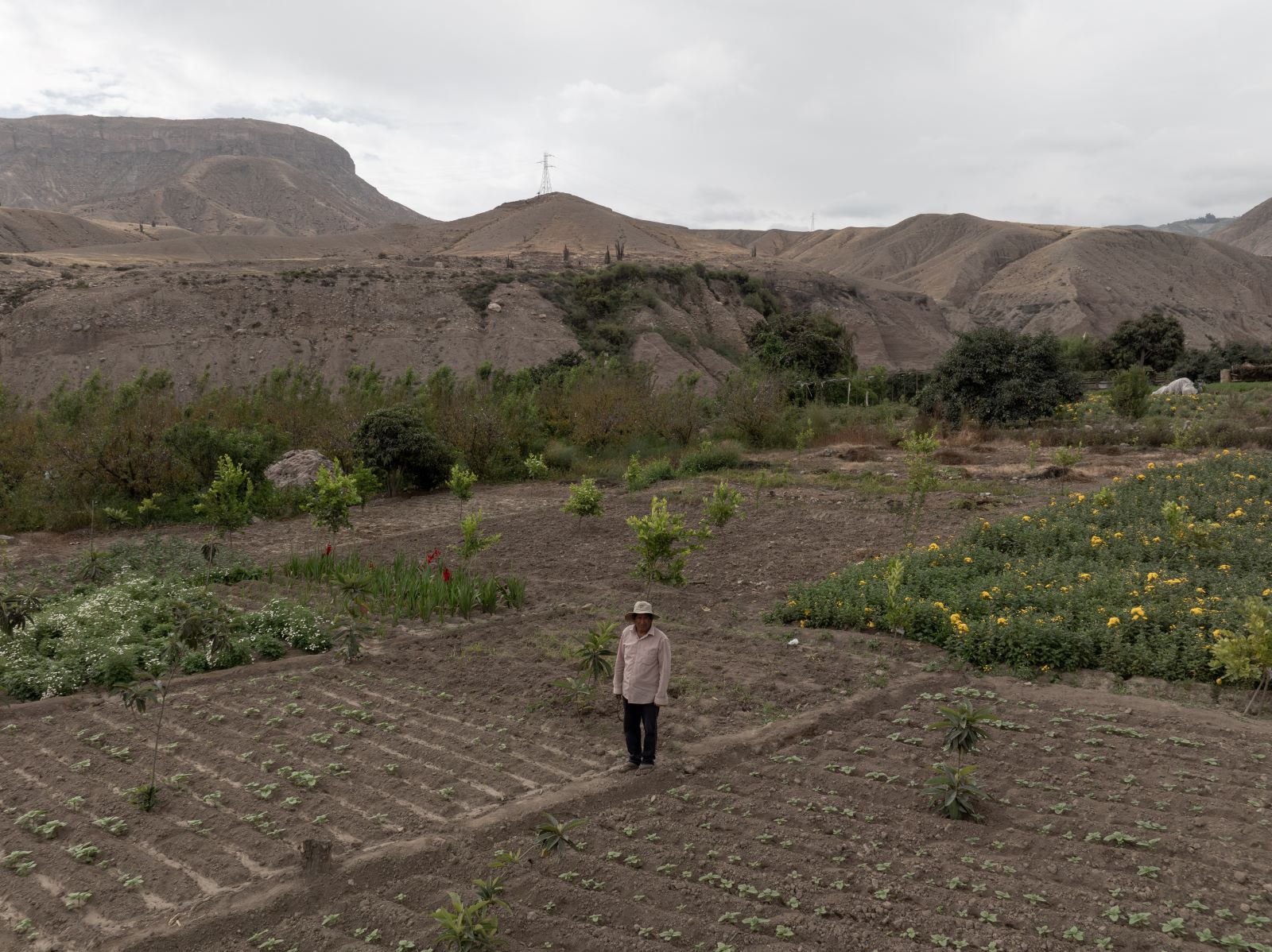
José Luis Coayla, 58, is well acquainted with this procedure. The lawyer and farmer lives in the district of Torata, on the slopes of the Tumilaca Valley. On his land, at the foot of the two mines, he grows avocados, peaches, and lemons.
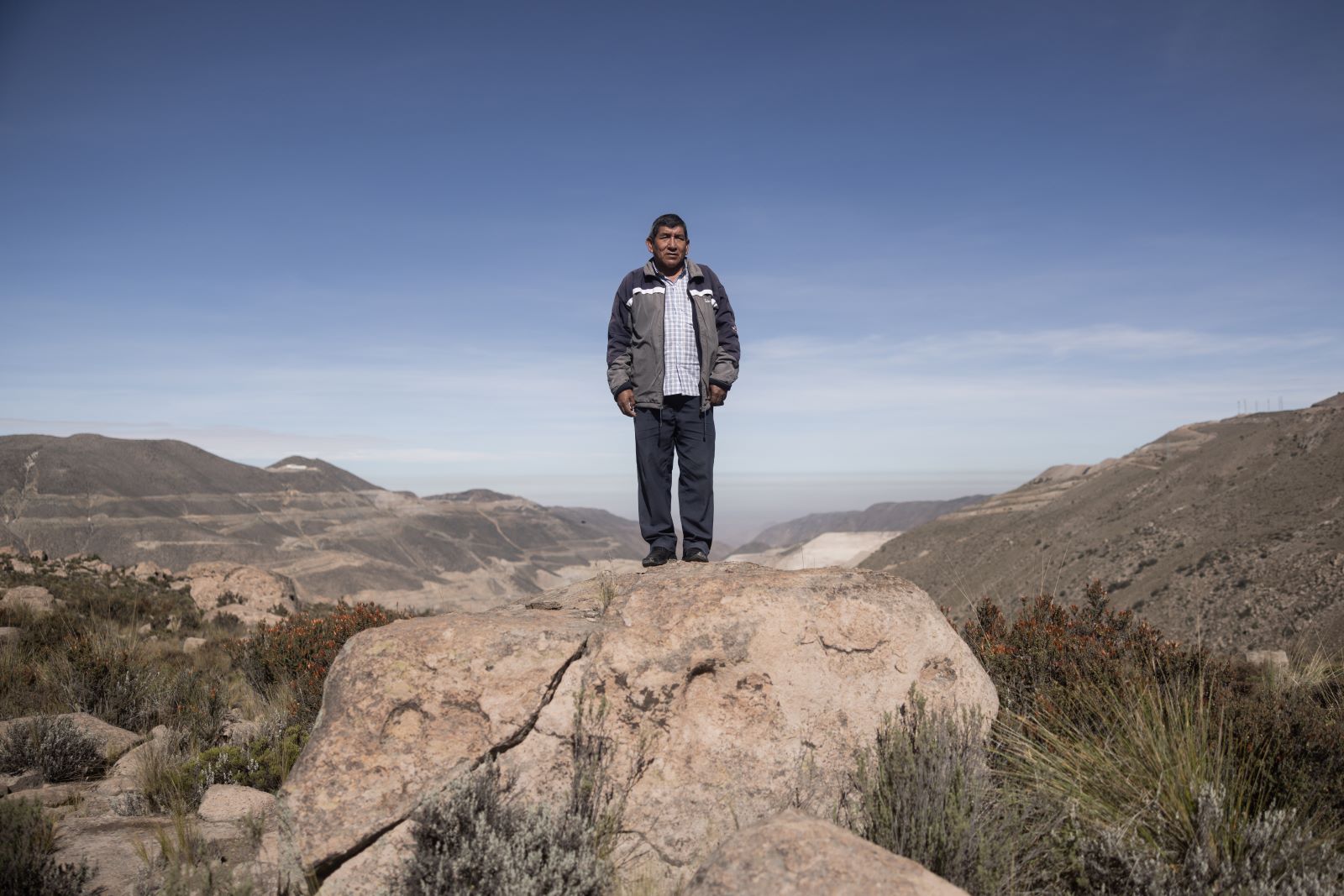
At the edge of the Quellaveco project’s open pit, at an altitude of 3,500 meters, Coayla points to an excavation stretching over four kilometers, operated by the British multinational Anglo American. “Everything in this area has been cleared away. When it rains, the cleared land and tailings, along with the removed soil, flow down into the valley and contaminate the water we use for our farms,” he says. Coayla demands that Anglo American take responsibility for the environmental impacts since the start of mineral extraction in 2022.
Even before the company began removing material from the subsoil, the Environmental Assessment and Enforcement Agency (OEFA), under the Ministry of the Environment (Minam), had already sanctioned the mining company. Since 2011, Anglo American has accumulated 19 environmental violations.
What is happening at the Quellaveco mining project is not an isolated case. An analysis of customs data and OEFA records, conducted by OjoPúblico, reveals that more than half—seven of the thirteen copper exporters to Germany—have been fined for a total of 189 environmental violations over the past fifteen years.
These violations include a failure to measure how mining operations affect air and water quality in mining areas; failure to implement promised protective measures; unauthorized expansion of facilities; and the construction of dams in protected areas. There are also cases of river diversion.
The exporter with the most sanctions is Southern Peru Copper Corporation, Peru Branch, with 68 environmental fines, followed by Compañía Minera Antamina S.A. (36) and Sociedad Minera Cerro Verde S.A.A. (24). In fourth place are Anglo American Quellaveco S.A. and Gold Fields La Cima S.A., both with 19 environmental violations.
This information takes on particular significance in light of two complaints filed with Germany’s Federal Office for Economics and Export Control (BAFA), the agency responsible for overseeing compliance with Germany’s supply chain due diligence law. One of these complaints concerns copper sourced from the Quellaveco mine, operated by Anglo American.
In Europe, Germany is the largest importer of Peruvian copper, according to customs data analyzed by this publication. Between 2019 and February 2026, it purchased this metal for a total of USD 3.34 billion, surpassed during that period only by China, Japan, and South Korea.
Under Germany’s due diligence law, companies in that country with more than 1,000 employees are prohibited from importing products that, according to the regulations, “pollute the soil, water, or air; limit access to drinking water or sanitation; seriously affect food production; or endanger human health.” Non-compliance can result in fines of up to 2% of annual turnover and a maximum of EUR 8 million (S/32 million).
The two complaints, filed in November of last year by Peruvian citizens, target Aurubis AG, the leading importer of Peruvian copper in Europe, which operates the continent’s largest refinery in Hamburg.
These complaints come at a time when Germany is seeking to double its copper demand by 2035 as part of its economy’s energy transition. This was noted by David Schmidt, economic advisor at the German Embassy in Peru, at last year’s Perumin mining fair, where Germany was the main partner.
At the same time, the copper industry is experiencing one of its most profitable periods. The international price of the metal exceeded $14,000 per ton in January of this year, a historic high.
Even before that surge, companies in the sector were already posting significant results. Anglo American, whose Quellaveco mine has accounted for about 5% of copper exports to Germany since 2019, distributed $200 million in dividends to its shareholders in 2025, according to the company.
On March 5, the German authority BAFA confirmed that, regarding the complaint about Quellaveco, it “would follow up on the facts presented,” according to the documents from both complaints and the responses accessed by OjoPúblico.
The complaint lists Lucio Flores Toledo as the petitioner; he is the president of the Moquegua Agrarian and Environmental Federation and coordinator of the National Platform of People Affected by Heavy Metals in the region. The 70-year-old leader received legal support from the NGO Red Muqui and the Catholic international aid organization Misereor, based in Germany.
Flores Toledo maintains that Anglo American’s mining project affects the health of the residents of the Tumilaca Valley, as well as their access to drinking water and local agriculture.
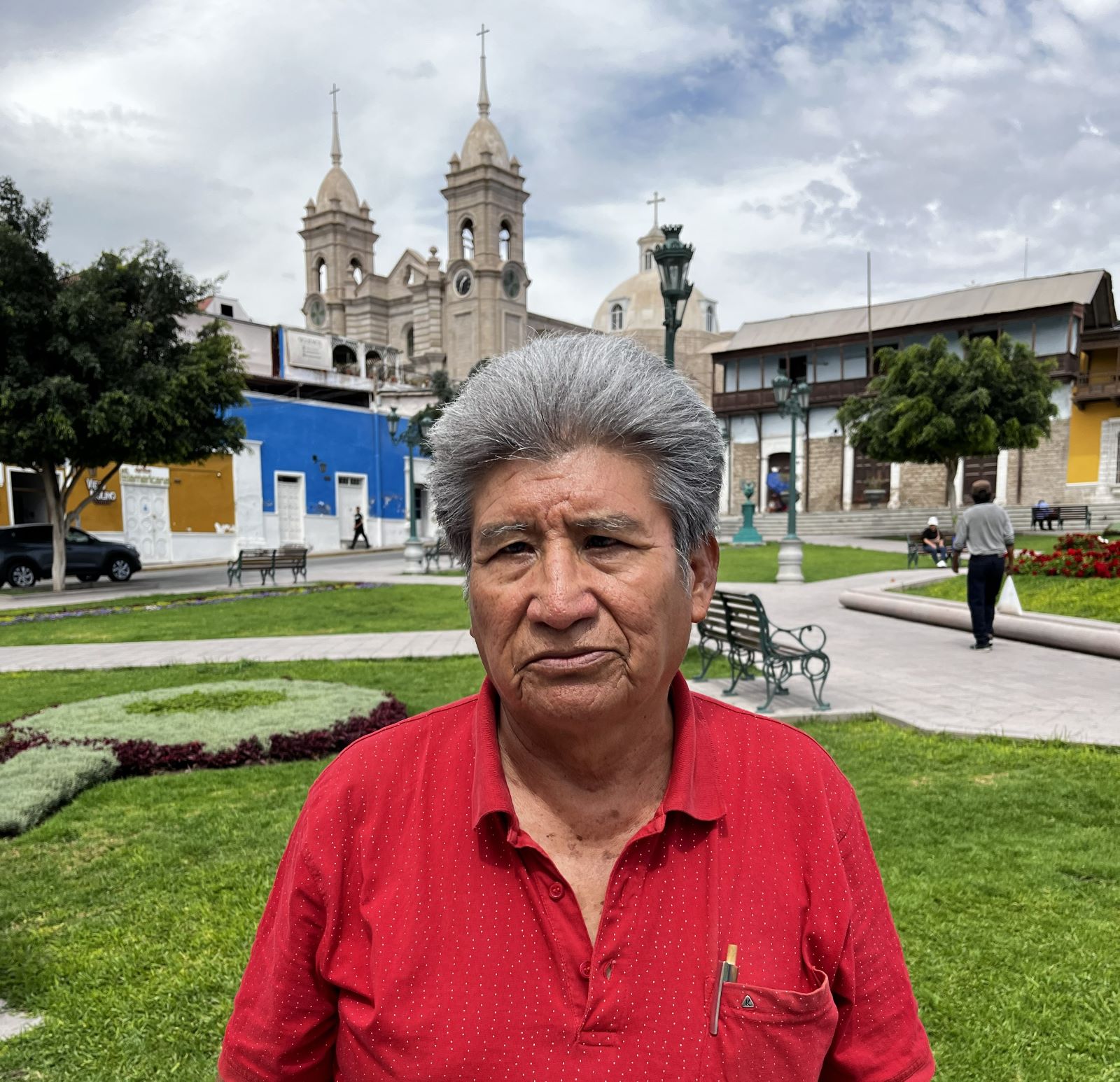
“When the project’s first environmental study was approved 26 years ago, warnings were ignored, even though the mining area is located in a river basin,” Flores Toledo told this publication.
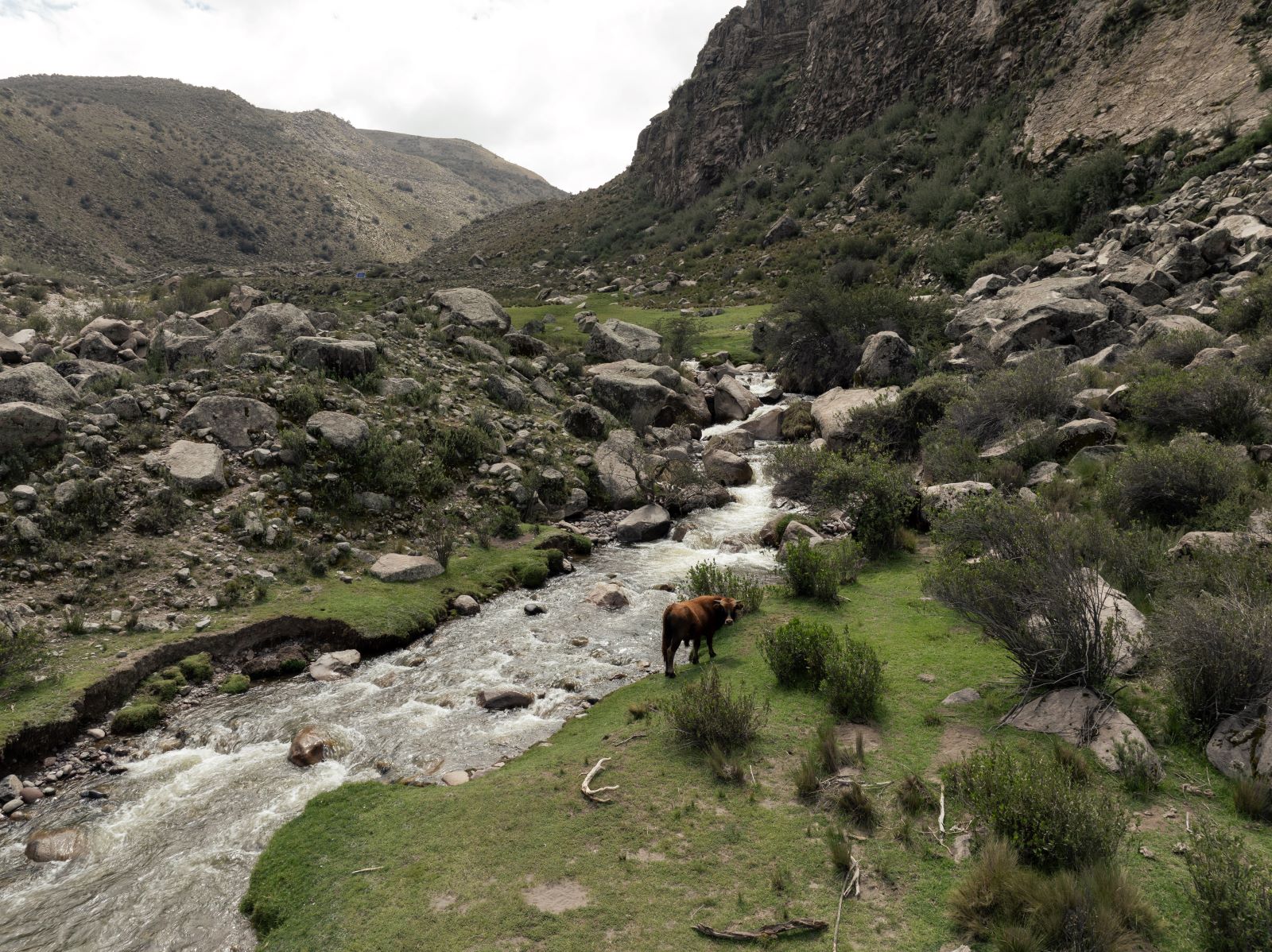
The Asana River flows through the mining area, supplying water to the Tumilaca Valley and the city of Moquegua. To prevent river water from coming into contact with construction activities and mining operations, Anglo American diverted its natural course through an eight-kilometer underground tunnel.
However, the OEFA recorded a deterioration in water quality both before the water enters and after it exits the tunnel. According to a report by the agency, the diversion has also disrupted the river’s hydrological and ecological balance, posing risks to species such as the Telmatobius peruvianus frog.
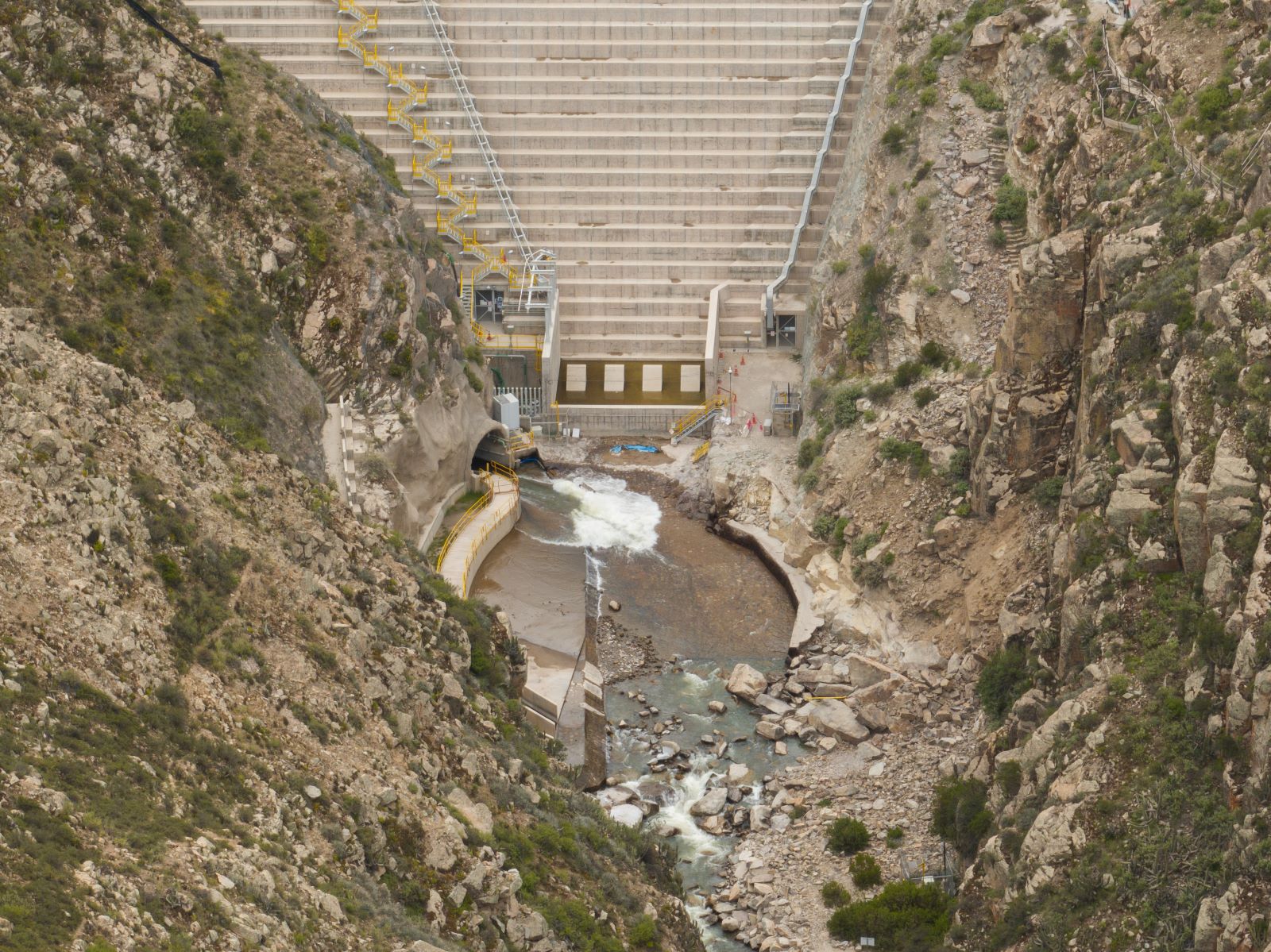
In a tributary of the Asana, copper concentrations above permitted limits were detected, while downstream a decrease in aquatic insects (macroinvertebrates) and greenish hues in the water were observed.
Moquegua is a desert region: the mountain slopes are arid, and patches of vegetation are only visible around the Asana River and its tributaries. The river is the main source of irrigation for agricultural fields and also supplies drinking water to the area’s population centers.
“Rural communities in the highlands not only use the contaminated water for their crops. They also drink it, because there is no treatment plant there,” said the complainant, Flores Toledo.
A 2023 study by OEFA detected concentrations of fine particulate matter containing copper in oregano fields located near the mine. In the same report, the agency notes that copper and molybdenum concentrations in the soils of the Piedra Mesa–Alto Tala sector, where agricultural areas are located, were higher compared to the values from a 2018 preliminary environmental assessment.
Additionally, measurements of drinking water in the Tumilaca Valley, conducted by the Moquegua Regional Health Directorate (Diresa) and accessed by OjoPúblico, recorded levels of aluminum, iron, arsenic, manganese, and lead above the limits permitted for human consumption.
In 2025, Diresa identified 41 people in the town of El Molino with arsenic levels above reference values, including 27 children. That same year, 16 cases were detected in the town of El Común, including four minors, and in the district of Moquegua, 12 children had concentrations exceeding permitted limits.
While the review of the complaint in Germany continues, Anglo American received fines totaling at least S/ 4.4 million in Peru between 2019 and 2025, according to OEFA resolutions accessed by this media outlet under the Transparency Law.
One of the highest fines was related to the diversion of the Titire River, a tributary of the Asana River, without the planned water collection infrastructure: for this reason, OEFA imposed a fine of S/ 1.72 million on the company in 2023.
In 2023, OEFA imposed a fine of S/1.72 million on Anglo American for failures in the diversion of the Titire River.
Other violations include construction deviations in the tunnel, the use of untreated domestic wastewater, and a lack of coordination with communities, as well as deficiencies in the control of contaminated water, the absence of erosion control measures, non-compliance with the conveyance of uncontaminated water, and monitoring failures.
While the Quellaveco facilities were still under construction in 2019, the project was already facing protests from the local population. Protesters called for a strike and blocked roads. Among those who participated in the protests were Lucio Flores Toledo and José Luis Coayla.
One of the main criticisms of the mining project was that nearby communities and towns do not benefit from the company’s presence. According to local leaders, the mine creates few jobs, and many require technical or college-level training. “Most people in the Tumilaca Valley make their living from agriculture and have not attended college,” says Flores Toledo.
In 2012, ten years before copper mining began in Quellaveco, a monitoring committee was established—in addition to a dialogue forum. In that forum, local authorities and Anglo American agreed on 26 commitments aimed at protecting the environment and water quality.
According to company information, to date, eight of the 26 agreements have been implemented, 14 years after the initial commitment. One of them is the integration of local suppliers and workers. According to Anglo American, 40% of the Quellaveco workforce comes from the Moquegua region, although the exact figure is not specified.
Another agreement is the construction of a dam on the Asana River intended to guarantee a supply of clean drinking water for the local population. To date, this commitment has not been fulfilled. Anglo American responded to OjoPúblico that “it is actively promoting this project and redoubling its efforts to optimize the execution timeline.”
The mayor of the Provincial Municipality of Mariscal Nieto, John Larry Coayla, is a member of the committee tasked with overseeing the implementation of these commitments. OjoPúblico arranged an interview with him, but it did not take place due to, according to the municipality, the local official’s busy schedule. The mayor also did not respond to the written questions sent to him by the time this article went to press.
Economically, the municipality benefits from mineral extraction within its jurisdiction through the mining royalty, a mechanism whereby a portion of the taxes paid by mining companies to the state is redistributed to the regions.
In 2025, Anglo American paid USD 277 million in taxes in Peru, according to a company report.
In total, the department of Moquegua received S/334 million in mining royalties in January of this year. This placed it as the third-largest beneficiary, after Áncash and Arequipa, according to the Ministry of Energy and Mines (Minem).
When asked by OjoPúblico about the environmental impacts cited in the lawsuit filed in Germany against the Quellaveco mining project, Anglo American stated that “it has not affected the quality or quantity of water” either during the construction phase or since operations began in 2022. It also noted that its monitoring systems allow it to verify that its activities “do not affect the ecosystem or the communities.”
The company added that “no study conducted by the authorities” on the Asana River or in the Tumilaca Valley has determined the existence of water contamination “attributable to Quellaveco.” Regarding the presence of metals in residents of the Tumilaca Valley, Anglo American noted that “there is no technical evidence linking mining activity” to the levels reported by Diresa in public water systems.
Environmental engineer Bladimir Martínez, from the NGO Red Muqui, has been studying copper mining in Peru for years. His organization accompanied Lucio Flores Toledo in filing his complaint in Germany. Anglo American, Martínez argues, is the “Tesla of mining companies”: highly technologically advanced, innovative, and widely recognized.
And yet, it cannot operate the Quellaveco mine without affecting the environment or the water supply. The diversion of the Asana River may seem logical on paper. In practice, explains Martínez, the mining area continues to cross an underground section of the river.
Added to this is another problem: fine, toxic metal dust. It is generated by blasting, truck traffic, and ore processing. This dust settles on fields and soil, is dispersed by the wind, and could be carried downstream by rain, all the way to the Tumilaca Valley.
For Martínez, all of this boils down to a fundamental question: “Would Germany allow a mining company to divert a river on which the population depends for its water supply?” he asks. “You can always say that things could be done better, but the central question is whether the mine should be there in the first place.”
In addition to Lucio Flores Toledo’s complaint against Aurubis, the German importer of copper from Quellaveco, a second complaint was filed last November with the German authority BAFA. In it, María Rojas Bruno, from the fishing town of Puerto Huarmey in Áncash, requests that the company take measures to address soil contamination, the impact on fishing areas, and air quality in the region.
According to the complaint, which cites various OEFA reports, these impacts are linked to the private port of Compañía Minera Antamina, from which copper is shipped to international markets—including Hamburg—bound for Aurubis, as customs data shows.
OjoPúblico sent a list of questions to the Antamina mining company regarding its environmental measures, the complaint in Germany, and the potential health effects of its operations in Puerto Huarmey. As of the publication of this article, no response had been received.
Complaints against Aurubis have not only been filed with the BAFA from Peru; there are also cases in other Latin American countries. Currently, the authority is reviewing files from affected individuals in Mexico and Panama, which allege environmental and health impacts during copper extraction and request action from the German company.
Aurubis faces complaints over possible violations of Germany’s supply chain law from Peru, Mexico, and Panama.
The atmosphere at the Aurubis shareholders’ meeting, held in February of this year in Hamburg, was, however, favorable, according to participants who spoke with this publication. The growing demand for copper amid high prices was highlighted positively by the company’s management.
Luca Schiewe, an expert from the NGO Facing Finance, did not attend the meeting but asked a participant to read a list of questions that also addressed the four complaints from Latin America.
Aurubis’ response was the same as in previous years: the company refused to disclose the origin of its copper, citing “competitive and contractual confidentiality reasons.” In response to an inquiry from OjoPúblico, the refiner reiterated that position, though it specified that in the 2024/25 fiscal year, it imported 13% of its copper concentrates from Peru, 17% from Brazil, and 18% from Chile.
However, customs data analyzed by this outlet confirms that Aurubis has purchased copper from Anglo American Quellaveco and Antamina in recent years.
“Aurubis’s persistent refusal to ensure transparency in its supply chain is striking, not only toward its shareholders but also toward its customers—the European companies that purchase copper products,” Schiewe told this outlet.
When asked by OjoPúblico about the ongoing complaint proceedings before the BAFA, Aurubis declined to comment but confirmed that it is in contact with the authority.
The company stated that it is part of its “philosophy” that it is “unacceptable” to process materials linked to human rights violations. Furthermore, Aurubis assured that, before entering into relationships with business partners, it conducts a human rights risk assessment process. It added that it also undergoes voluntary external audits several times a year.
Within German industry, however, there is interest in greater transparency. For instance, a working group in the automotive sector—involving, among others, Aurubis and the vehicle manufacturer BMW—is specifically addressing the impacts of copper sourced from Peru.
It is not yet clear whether the case will increase pressure to enforce Germany’s supply chain due diligence law. The regulation does not set a specific deadline by which the competent authority, the BAFA, must rule on potential violations.
According to diplomatic sources and representatives of the German business community, Germany aims in the future not only to import copper but also to participate in its extraction in Peru by acquiring stakes in mining projects. This would be a model similar to that of Japanese companies such as Mitsubishi, which owns 40% of the Quellaveco mine, operated by Anglo American.
However, Germany’s interest in investing directly in mining is limited due to political uncertainty and the high turnover of ministers at the Ministry of Energy and Mines (MINEM) in recent years.
Instead, attention is increasingly focused on Germany’s own subsoil. In various regions of the country, the possibility of exploiting undeveloped copper deposits is being evaluated. According to a study by the Federal Institute for Geosciences and Natural Resources, there are an estimated 2.4 million tons of copper buried in Germany. By comparison, Peru’s estimated reserves reach up to 100 million tons.
In eastern Germany, in the state of Thuringia, the first drillings have already taken place. The company in charge of the exploration: Anglo American.
Ayúdanos a seguir reportando los desafíos que enfrentan los principales ecosistemas del mundo —sus habitantes, flora y fauna— ante el cambio climático, el crimen organizado y las industrias extractivas. Solo el respaldo de la ciudadanía nos permite financiar este periodismo.
Se ha añadido un artículo a su lista de lecturas